Build a Car to Go Far Engines and Crate Tiers
Know every crate price and when jets outrun ground engines on distance-per-coin.
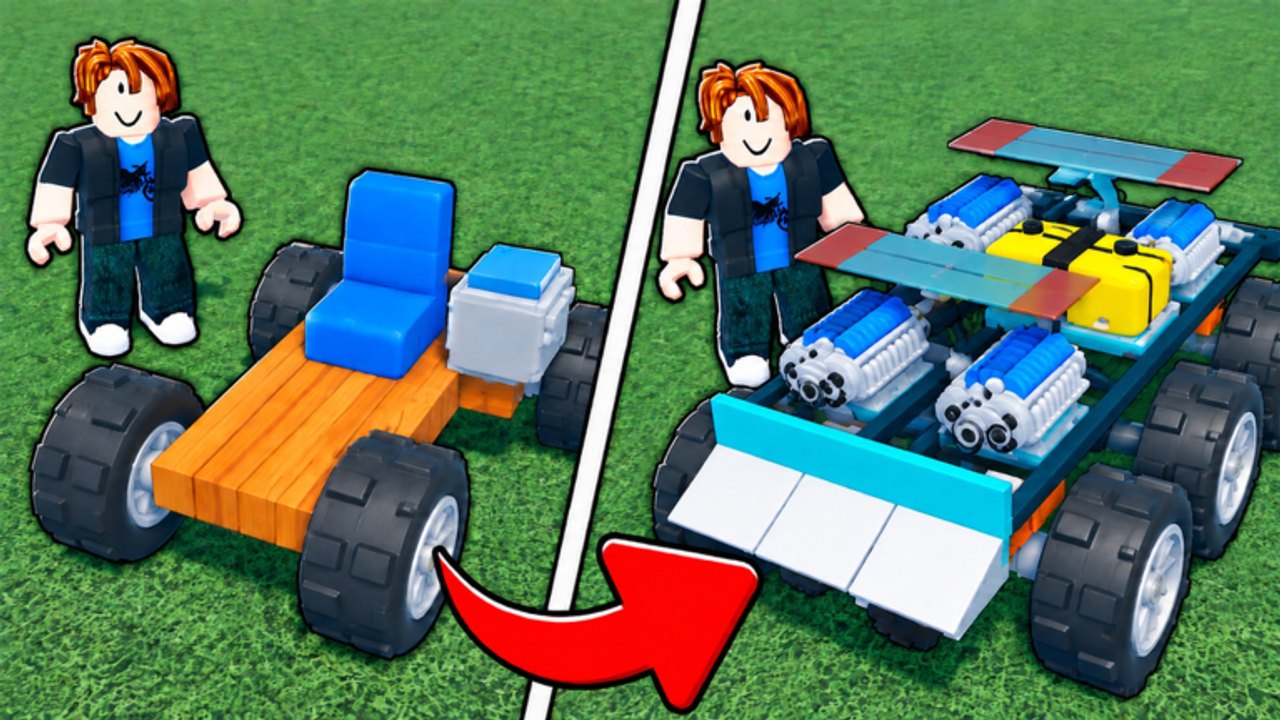
Engines decide how hard your car pushes once wheels leave the garage pad. In Build a Car to Go Far, power plants mostly arrive through engine crates, and each crate sits on a clear coin ladder. This page ranks those crates and the engines they feed by distance-per-coin, not by how loud the exhaust sounds in a full ten-player server.
If you only need the summary table, skim the hub at Tier List first. Come here when you are about to spend a large coin stack and want to know whether Basic, Road, Workshop, Tuned, or an aircraft crate is the correct next buy.
Engine crate price ladder
Memorize these shop numbers before every upgrade session:
| Crate | Coin cost | Role |
|---|---|---|
| Basic | 80 | Tutorial power, first offline income |
| Road | 850 | First real distance jump on ground |
| Workshop | 2500 | Mid-game workhorse crate |
| Tuned | 15000 | Late ground peak before or beside jets |
Those four prices are the spine of the early and mid economy. Aircraft engine crates arrived with the November 2026 flight update and sit beside this ladder for players who already solved fuel and chassis weight. Exact aircraft crate pricing can shift with patches—confirm in the live shop and cross-check Jet Map Update after major notes.
Tier rankings for engines
S-tier — jet and racing light builds
Jet engines paired with a light chassis and a racing-oriented drivetrain sit at the top of distance-per-coin once you can feed them. Jets convert fuel into altitude and long glides across the extended biome map, which multiplies meters far beyond what a heavy wooden box can scrape on the ground. The catch is burn rate: jets empty tanks quickly, so an S-tier jet build without Large fuel is a trap, not a flex.
Racing-minded ground setups that stay light also touch S-tier on shorter routes when you are still saving for reliable flight parts. Keep wood structure minimal, mirror left and right, and avoid stacking decorative blocks that only add mass.
A-tier — entry jet, V8-class, large fuel synergy
Entry jet options, V8-class ground engines, and any power plant that finally justifies Large fuel belong here. A-tier is the climb band: you leave Workshop comfort, start touching Tuned pulls or early flight, and your offline earnings feel meaningful between sessions. Pair A-tier engines with Large tanks before you chase vanity body kits.
If a crate opens into a strong V8-like engine while your wheels are still Small, park the flex. Finish fuel, then step wheels toward Rally using Wheels and Fuel, then let the engine stretch its legs.
B-tier — V6-class and standard progression
V6-class engines and other mid shop drops are honest workhorses. They reward Road and Workshop spending without demanding Tuned bankrolls. On medium fuel and standard wheels, B-tier power clears beginner biomes and funds the next crate. Do not feel forced to skip this band; many coin curves look better when you ride B-tier efficiently instead of starving a Tuned engine.
C-tier — starter Basic and heavy mistakes
Basic (80) engines are correct on day one and wrong as a long-term plan. They teach controls, start offline earnings (early examples land near ~21.88 coins/hr per small engine), and let you claim Codes rewards without confusion. They become C-tier the moment you still mount them on a heavy wood stack after Road crates are affordable.
Any engine—Basic through Tuned—drops a tier when bolted to an overweight, asymmetric chassis. Weight is a silent tax on distance-per-coin.
Upgrade order that protects crate value
- Expand fuel so the new engine can finish the map segment you care about.
- Buy the next engine crate (Basic → Road → Workshop → Tuned, then aircraft when ready).
- Improve wheels so power becomes traction instead of wheelspin.
- Enforce symmetry and cut unused wood.
- Add jets, rockets, wings, or propellers only after tanks can survive the burn.
This order is repeated across the wiki because it is the difference between a Tuned flex that dies at mid-map and a Workshop car that banks coins every run. Practice the pad workflow in How to Build and route planning in Max Distance.
Jets, propellers, and aircraft crates
The November 2026 update reframed endgame engines. Jet engines, propellers, and aircraft engine crates opened flight as a primary distance strategy, not a side gag. Helicopter-style rotors and skids appear in what’s-new notes for specialized vertical builds. Flight parts still respect the 1024-part build cap and piston/hinge groups 1–8, so keep mechanisms tidy.
Jets are S-tier for meters and C-tier for patience if you ignore fuel. Propellers suit steadier aircraft that trade peak speed for control. For build recipes and flight handling, use Plane and Jet. For coin farming that funds crates, use Fast Coins.
Offline earnings and why engines matter when you log off
Engines do work while you are away. Early small engines can produce on the order of ~21.88 coins per hour each in beginner examples, which means a smart Basic-to-Road climb funds Workshop without endless grinding. Stacking several weak engines on a useless heavy frame is less efficient than one solid Road or Workshop plant on a light car with decent fuel. Offline income should reinforce the same distance-per-coin philosophy you use on live runs.
Server context and co-op testing
Servers host up to 10 players, with the wider game past 7M+ visits and 100k+ favorites. When friends join through the Roblox People tab, test engine swaps on a shared pad instead of deleting someone’s Tuned mount. Ask before editing, keep etiquette tips from the Players Hub in mind, and compare notes after runs instead of arguing over crate RNG in public chat.
Practical shopping checklist
- Count coins against the 80 / 850 / 2500 / 15000 ladder before opening anything.
- Confirm fuel size can survive your planned route or flight path.
- Reject heavy wood vanity until the engine and tanks are settled.
- Redeem RELEASE, JET, and GOFAR on Codes when active so crate money arrives faster.
- Re-read this page after patches listed on the Updates Hub.
Engines are the heart of the meta, but only when fuel, wheels, and weight let them breathe. Buy the crate that matches your tank—not the crate that matches your ego.
Frequently Asked Questions
Quick answers about builds, codes, and Parts Shop prices.
What are the engine crate prices?
Basic costs 80 coins, Road 850, Workshop 2500, and Tuned 15000. Aircraft crates sit beside that ladder after the flight update—confirm live shop prices after patches.
When should I move from Workshop to Tuned?
After Large fuel and better wheels are online. A Tuned engine on an empty tank loses more distance-per-coin than a fed Workshop build.
Are jet engines always S-tier?
They are S-tier for distance when fuel capacity matches burn rate and the chassis stays light. Without fuel, jets become expensive short runs.
Do engines earn coins offline?
Yes. Early small engines can earn around 21.88 coins per hour each in beginner examples, so upgrading engines also improves idle income.
Where do I learn flight builds?
Use the Plane and Jet guide for construction and handling, and the Jet Map Update article for what the November 2026 patch added.